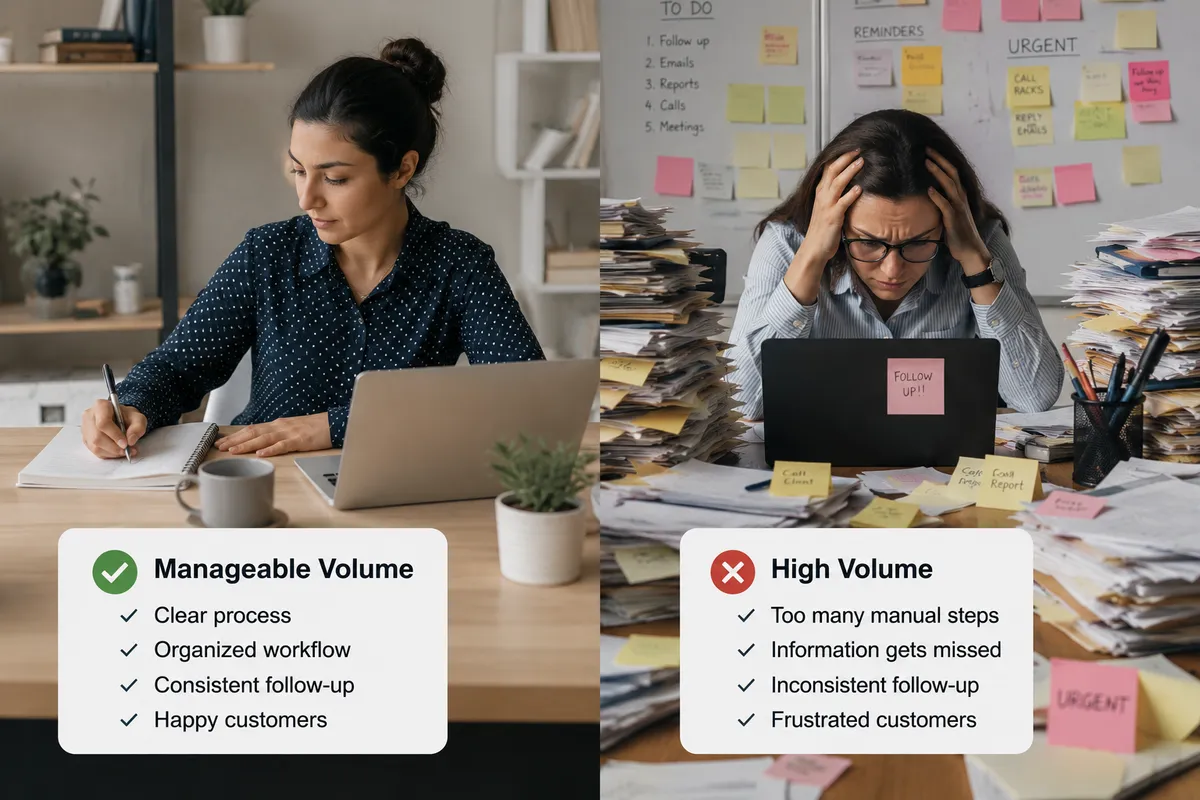
When Do Manual Processes Start Slowing a Growing Business?
Manual processes are not automatically bad.
Many businesses begin with simple systems that work perfectly well at a smaller scale.
Problems appear when the workload grows but the process does not.
Common Warning Signs
A manual process may be becoming a bottleneck when:
• The same information is entered repeatedly
• Tasks depend entirely on someone remembering
• Customers wait for routine updates
• Staff spend significant time on repetitive work
• Important information lives in several places
• Small mistakes happen more frequently
These problems often develop gradually.
Busy Teams Create Workarounds
When systems no longer match the workload, employees naturally create shortcuts.
They may use:
• Personal notes
• Separate spreadsheets
• Individual inboxes
• Sticky notes
• Unconnected applications
These workarounds may solve an immediate problem but create more complexity over time.
Not Everything Should Be Automated
The purpose of automation is not to remove every human interaction.
Some conversations require judgment, empathy, expertise, or personal attention.
Better candidates for automation are predictable, repetitive tasks such as:
• Confirmations
• Routine reminders
• Internal notifications
• Basic data movement
• Follow up triggers
The Goal Is Better Use of People
Effective systems allow employees to spend less time managing repetitive administration and more time handling work that genuinely needs human attention.
Next Steps
Look for tasks your team performs repeatedly every day or every week.
Then identify which ones follow the same predictable steps each time.
That is often where practical automation begins.
Ardent Innovations helps businesses examine these kinds of operational and communication workflows.
For more practical guidance, look up Ardent Innovations or visit: https://ardent-innovations.com/blog-resources
#BusinessAutomation #OperationalEfficiency #BusinessGrowth #WorkflowAutomation #SmallBusiness
